.jpg)
A student nervously walks onto a stage with a script in hand. Another picks up an instrument for the first time. Someone else stands in front of a blank canvas, wondering where to begin.
It may look like they're learning theater, music or visual art, but they're also learning how to take risks, solve problems and turn an idea into something real. These are skills you can't always learn from a textbook alone.
Every parent wants to set their child up for the best possible future, and conventional wisdom often suggests we zero-in on the fundamentals: reading, writing, math and science. But a student's education is about more than what they can memorize for a test.
To thrive in the real world, students also need to know how to speak with confidence, work with people who see things differently than they do, and recover from mistakes. A good student can recite the right answer, but a future leader knows how to think outside the box and offer a new perspective.
Whether students gravitate toward music, theater, dance or visual art, let's look at a few ways creative experiences can help students develop skills for life.
.jpg)
The arts connect learning to the real world
Subjects like history, literature, and social studies can sometimes feel incredibly abstract when students encounter them only through textbooks and lectures.
And it's understandable. For a young person raised in the age of YouTube and AI, imagining everyday life for someone who attended a one-room schoolhouse might as well be imaging life on another planet. But when a student has the opportunity to be immersed in a period through its music, visual culture or storytelling, distant historical figures become real people that they can relate to.
At the Apollo, music becomes a way for students to step inside history through in-school workshops like A Journey Through Song Lyrics Across Time, which examines how music reflects the social and political climates of different eras. Participants can explore music from the Civil Rights Movement for example, before writing lyrics inspired by their own lived experiences.
Approaches like this make learning more tangible while encouraging students to ask new questions about the people, events and ideas behind the lesson.
The arts teach students to manage their time and meet deadlines
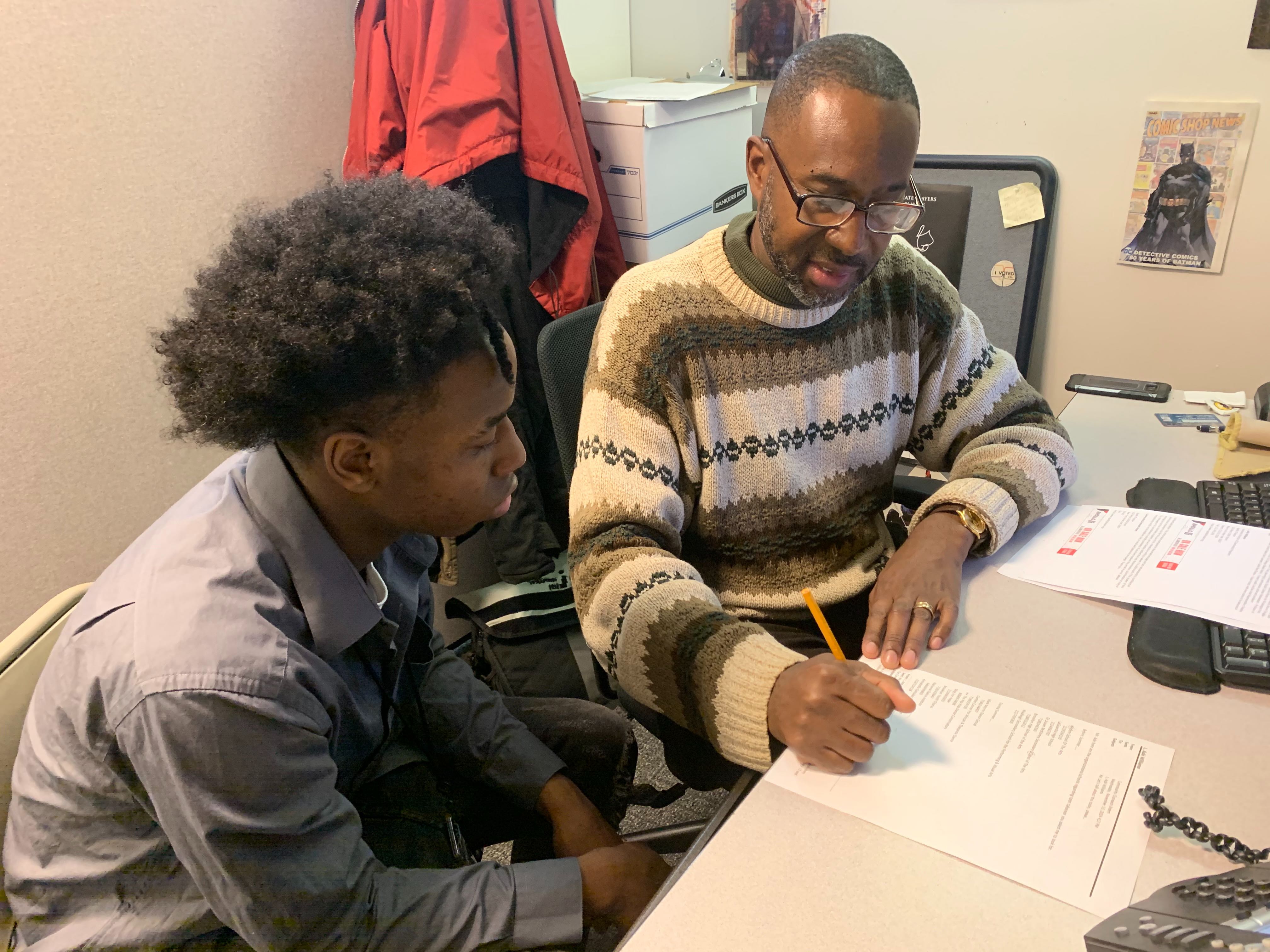
Maybe the history teacher can offer an extension on a paper, but when it comes to the school play, opening night is opening night. As much as the arts are a space for free thinking and letting loose, creative work still requires planning, scheduling and following through on commitments.
Learning a new instrument or taking up photography while managing a full load of classes, homework and family responsibilities teaches students how to prioritize and make room for what matters to them. Between the first rough rehearsal and the thrill of the curtain rising, students learn that making something they're proud of requires showing up consistently and being prepared when the big day arrives.
.jpg)
The arts teach persistence
Whether they go on to become an artist or an astronaut, every student must learn what it takes to move from "I have an idea" to "Here's what I made." Because what happens in between is where the real magic is.
The creative process teaches students that the first try doesn't always work. A scene might need to be rewritten, or a dance sequence might need another rehearsal. As part of the Apollo's Technical Production Internship program, students learn through hands-on workshops that improvement comes through practice and revision. When lights go out or cues are missed, students experiment, troubleshoot and make adjustments as they bring to life our signature summer event "Teen Takeover".
Those same habits can help students approach a difficult math problem or a challenging project with the understanding that a "failed" attempt doesn't have to dictate what happens next.
The arts give students permission to express their unedited ideas without the pressure to be perfect from the start. They learn it's ok to be a beginner, make mistakes and keep going. That willingness to try and try again can make students less afraid to take on new challenges, both inside and outside the classroom.
.jpg)
The arts teach students to keep cool under pressure
Even if they never hit a Broadway stage, chances are every student will someday give a presentation to an audience, pitch a big sale, or rub elbows with important colleagues. In those moments, it helps to have lots of practice keeping cool when the stakes are high.
Performance opportunities allow students to learn vocal techniques that help them project and be heard, use body language and gestures to exude confidence, and build improvisational techniques that empower them to think on their feet.
With a bit of practice, students realize that having stage fright doesn't have to stop them from taking the stage. Instead they can take a breath, trust their preparation and deliver with charm.
The arts aren't separate from learning, they are a crucial part of how we learn. And the value of arts education isn't limited to only those who aspire to be the next great musician, actor, dancer or visual artist. A sculptor creating a statue uses many of the same spatial awareness principals used by civil engineers mapping out buildings and streets. A student who practices public speaking during the school play may one day feel more comfortable speaking up in a packed boardroom.
Every rehearsal, performance, sketch, song and creative challenge gives students another opportunity to practice skills that will help them navigate the real world. What may look like just a fun new hobby can actually be a lesson in trusting their ideas, working alongside others, and following-through on their word. That kind of learning has a place in every student's education, and those lessons stay with them long after the curtain closes.